CarreerTech
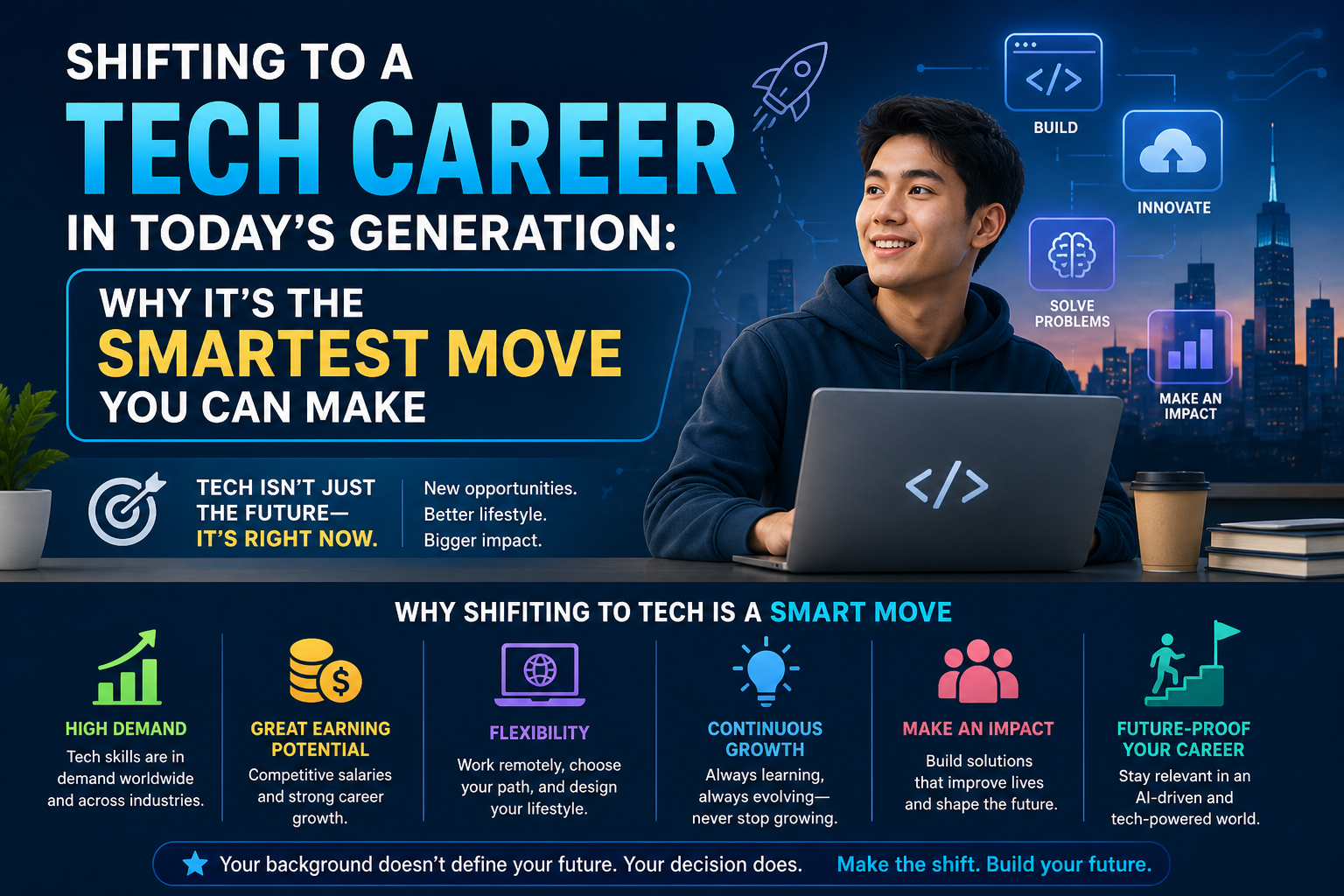
Shifting to a Tech Career in Today’s Generation: Why It’s the Smartest Move You Can Make
5 min read
The world is changing faster than ever. Technology is no longer just a “career path”—it has become the foundation of almost every industry.
The world is changing faster than ever. Technology is no longer just a “career path”—it has become the foundation of almost every industry. From business and education to healthcare and entertainment, everything now runs on digital systems. Because of this shift, more people are considering a transition into tech careers, even if they started in completely different fields.
The good news? It’s more possible today than at any other time in history.
Why Tech Careers Are Growing So Fast
We are living in a digital-first era where companies rely heavily on software, automation, and data. Businesses need websites, apps, cloud systems, and AI-powered tools to stay competitive.
This demand has created massive opportunities in roles such as:
Web Development
Software Engineering
UI/UX Design
Data Analysis
AI and Machine Learning
Cybersecurity
Unlike traditional careers, tech jobs are not limited by location. Many roles are remote, freelance, or hybrid—giving professionals more freedom and flexibility.
You Don’t Need a Tech Degree to Start
One of the biggest misconceptions is that you need a computer science degree to enter tech. That is no longer true.
Many successful developers, designers, and engineers today are:
Career shifters from unrelated industries
Self-taught through online platforms
Bootcamp graduates
Freelancers who learned through real projects
What matters most now is skills, consistency, and a strong portfolio, not your academic background.
The Role of AI in Learning Tech Faster
Artificial Intelligence has completely changed how people learn and work in tech.
Tools like AI coding assistants and automated generators help beginners:
Understand code faster
Fix errors quickly
Build projects with less frustration
Learn real-world development patterns
Instead of replacing developers, AI is acting as a learning accelerator and productivity booster.
This means beginners can now reach intermediate levels much faster than before.
How to Start Your Transition Into Tech
If you're coming from a non-tech background, the journey may feel overwhelming at first—but it becomes manageable when broken into steps.
1. Choose a Direction
Start by selecting one path:
Web Development (best for beginners)
UI/UX Design
Data Analysis
Mobile App Development
Don’t try to learn everything at once.
2. Learn the Fundamentals
For web development, for example:
HTML → structure
CSS → design
JavaScript → functionality
Once you understand the basics, frameworks like React or Next.js become easier.
3. Build Real Projects
This is where most beginners struggle—but it’s also the most important step.
Start building:
Personal portfolio website
Landing pages
Simple web apps
Clone projects (like dashboards or blogs)
Every project improves your confidence and proves your skills.
4. Use AI as Your Learning Partner
Instead of copying code blindly, use AI to:
Explain concepts
Debug errors
Suggest improvements
Generate ideas for projects
Treat AI like a mentor, not a shortcut.
5. Create a Portfolio
Your portfolio is your new resume in the tech world.
It should show:
Your projects
Skills used
Problem-solving ability
Clean UI/UX design
Even 3–5 solid projects can land you freelance or entry-level work.
Challenges You Will Face (And Why They’re Normal)
Switching careers is not easy. Most people face:
Information overload
Imposter syndrome
Slow progress at the beginning
Fear of failure
But every developer you admire once went through the same stage. The difference is they kept going.
Consistency matters more than speed.
Opportunities in Today’s Tech Industry
The demand for tech talent continues to grow globally. You can work as:
Freelance web developer
Remote software engineer
Startup builder
Agency developer
AI automation specialist
Even small businesses now need websites and digital systems, creating endless freelance opportunities.
Platforms like Upwork, Fiverr, and remote job boards have made it easier than ever to get started.
The Future Belongs to Digital Builders
We are moving toward a world where every business is a tech business. Whether it’s a small local shop or a global corporation, digital presence is no longer optional.
Those who understand how to build, design, and manage digital systems will always be in demand.
And the most exciting part?
You can start from zero today and still build a strong tech career within a few years.
Final Thoughts
Shifting into a tech career is not just about changing jobs—it’s about changing your future opportunities.
You don’t need to be perfect. You don’t need to know everything. You just need to start.
Learn step by step. Build consistently. Use modern tools like AI wisely. And most importantly, keep creating.
Because in this generation, the people who build technology are the ones shaping the future.